The Scan Is Only Half the Case: Manual Checks Japanese Implant Teams Run Before Surgery
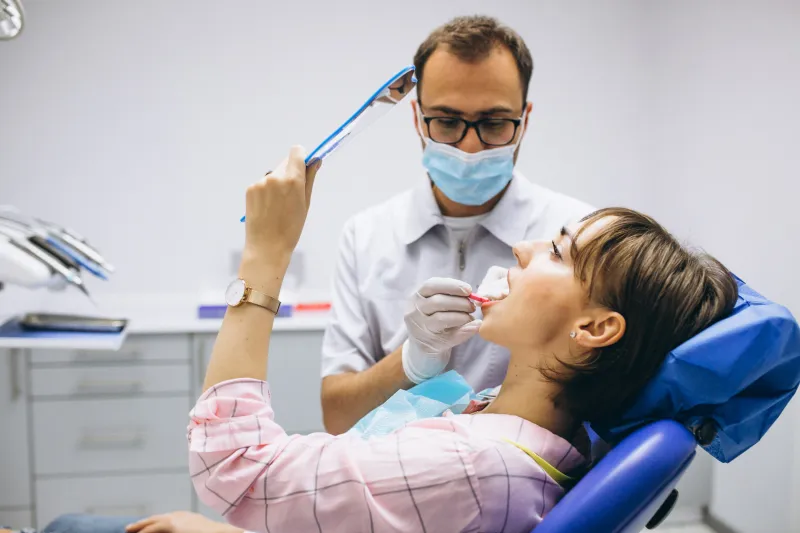
Photo: dentist reviewing CBCT scan with patient in dental clinic, via get.pxhere.com
In 2026, a well-equipped US implant practice can produce a striking piece of evidence: a three-dimensional scan, a prosthetic plan, and a guided-surgery overlay that appears to settle every question before the first incision. The image is precise. The question is whether precision on a monitor is the same thing as readiness in a mouth.
Many Japanese implant clinics work with the same scanning and planning tools available in the United States. What differs is how they treat the output. Rather than reading the software as a verdict, they tend to read it as a draft—a strong draft, but one still subject to hand checks that no algorithm performs. The distinction matters for US patients who are handed a digital plan and asked to approve surgery.
What the Software Actually Sees
Planning software is excellent at geometry. It can measure bone height and width, trace a nerve canal, simulate implant diameter and angulation, and print a surgical guide that places the fixture within a fraction of a millimeter of the file. It can show where a crown will emerge and how much bone surrounds the threads.
It cannot feel a patient's bite. It cannot tell whether the soft tissue is inflamed, whether the tongue will push against the site, or whether the patient has the dexterity to clean around the restoration. It does not know that the opposing tooth is a heavy grinder or that the patient clenches during a stressful workweek. Those are clinical observations, and in Japanese practice they are often the checks that decide whether a plan proceeds.
Check One: Bite Forces and the Occlusal Map
A plan that looks balanced in software may concentrate load on a single implant. Japanese clinicians commonly verify the occlusal relationship by hand—articulating paper, a bite registration, and sometimes digital occlusal analysis—before accepting an implant position. They want to know where the implant will meet the opposing dentition and whether the patient has parafunctional habits that change the answer.
For a US patient, the practical question is straightforward: has anyone examined how the planned implant will carry force, not just where it will sit? If the answer is limited to a software overlay, ask for the occlusal rationale in plain language.
Check Two: Soft Tissue Health as a Gate, Not a Footnote
Bone volume is visible on a scan. Tissue quality is not. Japanese implant teams often treat the health of the gums as a precondition rather than a formality, checking for inflammation, plaque control, and the amount of keratinized tissue around the planned site. A plan that is prosthodontically elegant can still fail if the surrounding soft tissue cannot tolerate the restoration.
This is not a uniquely Japanese insight, but it is applied with particular discipline in clinics that prefer to delay rather than repair. A US patient should expect a direct assessment of gum health and hygiene before a surgical date is fixed.
Check Three: Bone Quality Beyond Density Numbers
Hounsfield units on a CBCT scan offer a useful estimate of bone density, but they do not describe how bone will respond to drilling. Experienced clinicians rely on tactile feedback during surgery, insertion torque, and sometimes resonance frequency analysis to judge primary stability. Japanese clinics may adjust the plan—or stage the procedure—when the hand disagrees with the image.
That willingness to change course mid-treatment is the real point. A digital plan should include a contingency for bone that proves softer or denser than expected. Ask whether the practice has one, and who makes the call if the surgical site does not match the file.
Check Four: Can the Patient Clean It?
Hygiene access is a manual check because it depends on the patient, not the software. An implant placed for ideal prosthetic symmetry may be difficult to floss or impossible to reach with an interdental brush. Japanese hygienists often review the planned emergence profile and the patient's home-care routine before surgery, not after.
US patients should bring the question into the consultation: given my current brushing and flossing habits, how will I clean this site? A plan that ignores maintenance is a plan that assumes a patient who may not exist.
Check Five: Healing Response and the Option to Wait
Japanese implant clinics frequently build waiting points into treatment—not as delays for their own sake, but as opportunities to confirm that soft tissue has matured, inflammation has resolved, or the patient's response to an earlier stage is acceptable. The software may say the site is ready. The clinician may say the mouth is not.
This is where a green light on screen can be overruled by a hand check. A patient who understands that possibility is less likely to feel ambushed by a postponed surgery date.
Questions to Ask Before You Accept a Tech-Driven Plan
- Which parts of this plan were confirmed by hand, and which come only from the scan?
- How will my bite force be assessed, and does the plan account for clenching or grinding?
- What is the health of the soft tissue at the site, and what would make you delay?
- If the bone feels different during drilling, what is the backup plan?
- How will I clean around this implant at home, and who will show me?
- Is there a scheduled review point before the final restoration?
- Who besides the software has reviewed the plan, and what did that review change?
Technology as a Second Opinion
The goal is not to distrust digital planning. It is to place it in the right sequence. In Japanese implant practice, the scan often functions as a second opinion—a precise, useful check on clinical judgment—rather than the first and final word. US patients can ask for the same order of operations. When the software says yes, the appropriate response is not automatic agreement. It is a careful look at what the software could not see.