When the Consent Form Says Something Else: A US Patient's Glossary for Japanese Implant Language
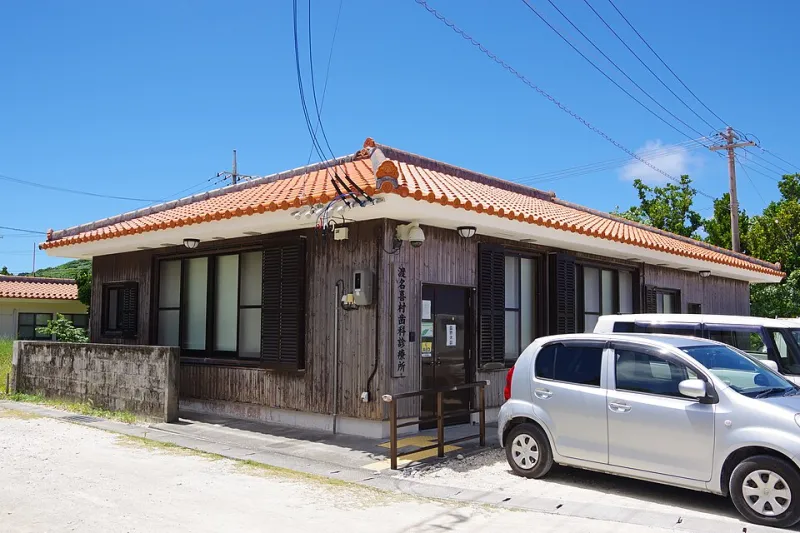
Photo: Kugel~commonswiki, CC BY-SA 4.0, via Wikimedia Commons
A dental consent form is not a dictionary. It is a clinical instrument. In Japan, as in the United States, the words on that form determine what a patient is agreeing to, what a clinic is promising, and what happens when healing does not go as planned. The difficulty for US patients is that several common Japanese implant terms do not map neatly onto American dental vocabulary. A literal translation can be grammatically correct and clinically misleading.
This is not a travel curiosity. It is a patient-safety issue. The goal is not to turn patients into Japanese speakers, but to help them ask better questions in English before they sign, pay, or schedule surgery.
Why a literal translation can mislead
Japanese treatment plans often use broad headings such as 説明と同意, meaning explanation and consent, and リスク・合併症, meaning risks and complications. Under those headings, a clinic may list items that a US patient would expect to see separated into diagnosis, alternatives, prognosis, and warranty exclusions. Machine translation tends to preserve the heading but lose the hierarchy. A phrase that means the clinic will observe the site may be translated as follow-up, which sounds more active than it is. A warranty clause may be rendered as guarantee without its conditions.
The practical risk is not that the Japanese term is untranslatable. The risk is that the English word chosen by a translation app is too clean. Implant consent depends on nuance: which bone is being grafted, how maintenance affects warranty coverage, and whether a complication is considered expected or exceptional.
Twelve terms worth slowing down for
The table below is not a complete glossary. It is a list of terms that frequently change the meaning of consent, cost, or aftercare. Clinics vary, so the question column matters more than any single English rendering.
| Japanese term | Common English rendering | Question to ask |
|---|---|---|
| 骨造成 or 骨移植 | Bone augmentation or bone graft | Which bone site will be grafted, with what material, and is a membrane or additional surgery required? |
| サイナスリフト or ソケットリフト | Sinus lift or socket lift | Which approach is planned, what is the risk to the sinus membrane, and is a shorter implant an alternative? |
| 抜歯即時埋入 | Immediate implant placement | Is the implant being placed at the same visit as extraction, and how will primary stability be confirmed? |
| 一次手術 and 二次手術 | First-stage and second-stage surgery | Is this a two-stage plan, when will the implant be uncovered, and what temporary tooth will I wear? |
| オッセオインテグレーション | Osseointegration | How will healing be measured before loading, and what torque or stability value is required? |
| 上部構造 | Superstructure or final crown | What material is planned, is it screw-retained or cement-retained, and when should it be replaced? |
| メインテナンス or 定期検診 | Maintenance or periodic examination | How often, with which clinician, and are probing, radiographs, and hygiene visits included in the fee? |
| 経過観察 | Follow-up observation | Is this a scheduled review or a problem-based visit, and will findings be given to me in writing? |
| 保証 | Warranty or guarantee | What is covered, for how long, what maintenance attendance is required, and is it transferable? |
| 自由診療 or 自費診療 | Self-pay treatment | What is included in the quoted fee, what is excluded, and can I receive an itemized estimate? |
| インプラント周囲炎 | Peri-implantitis | How does this clinic define it, how is it monitored, and what treatment is included or billed separately? |
| 説明と同意 | Explanation and consent | Will an interpreter be present, are alternatives and no-treatment options documented, and can I take the form home before signing? |
What Japanese clinics tend to document
Japanese implant clinics often provide a treatment plan with sections for diagnosis, proposed treatment, expected duration, estimated cost, and risks. A separate warranty document may set out 保証規定, warranty provisions, including required recall visits and exclusions for smoking or uncontrolled systemic disease. Maintenance may appear as メンテナンス計画, a maintenance plan, rather than as a single appointment. These are useful documents, but their value to a US patient depends on accurate explanation.
A clinic may also use 当院, meaning our clinic, in statements about responsibility. That sounds straightforward until a patient realizes the warranty does not travel to a dentist in Tucson or Chicago. Likewise, 抜去, removal, and 再手術, reoperation, may appear in a risk section without a clear statement of who pays if the implant fails. These are not signs of bad faith. They are signs that the consent form assumes a local patient who will return to the same clinic.
A question list for consent, treatment plans, and second opinions
Before signing, ask for the following in English and, where possible, in writing:
- A translated summary of the diagnosis, not only the procedure name.
- A list of alternatives, including no implant treatment, bridge, denture, or delayed placement.
- The specific risks the clinic considers material, and how each is managed.
- Which costs are fixed, which are estimates, and which are excluded from warranty.
- The recall schedule required to keep the warranty valid.
- The name and training of the clinician who will perform surgery and follow-up.
- Whether an independent interpreter can review the consent form with you.
For a second opinion, bring the Japanese treatment plan and any radiographs. Ask the second clinician to identify what is clinically clear, what is ambiguous, and what would need to be confirmed with the original clinic. Avoid relying on a translation app for warranty exclusions or consent language. A professional interpreter is cheaper than a misunderstood guarantee.
The practical rule
If an English word sounds simpler than the Japanese term it replaces, slow down. Ask what the clinic will actually do, what it will not do, and what you must do to keep the agreement valid. Consent is not a translation exercise. It is the moment when clinical uncertainty becomes a shared responsibility. The patient who asks for clarity before signing is not being difficult; that patient is doing exactly what informed consent is supposed to make possible.