A Decade Is a Treatment Plan, Not a Slogan: What Japanese Recall Discipline Teaches US Implant Patients

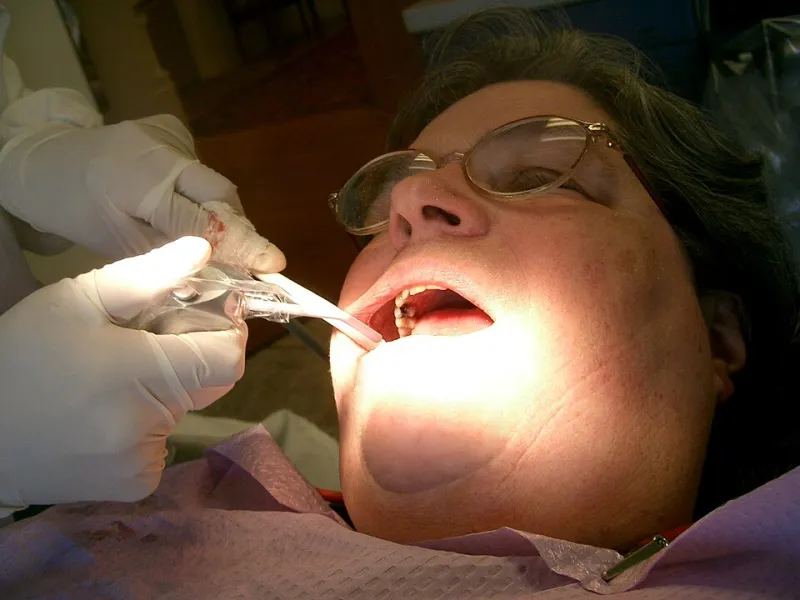
Photo: dental implant maintenance recall appointment with radiograph and periodontal probing, via cosmobc.com
A dental implant is often sold as a permanent tooth. A more useful phrase is a long-term restoration with a maintenance contract. The difference matters at year one, when the crown feels secure, and at year ten, when bone levels, soft tissue, and occlusal forces have had time to reveal whether the plan was built for duration.
Japanese implant clinics frequently organize care around structured recall rather than episodic repair. That does not make every Japanese clinic superior, and it does not guarantee a decade of success. It does offer US patients a practical model for asking better questions about follow-up, documentation, and the difference between survival and success.
Survival is not the same as success
Implant survival usually means the implant is still present. Success is stricter. It may include stable bone levels, healthy soft tissue, no peri-implantitis, acceptable function, and no persistent symptoms. A clinic can report high survival rates while still seeing crowned implants with bone loss, inflammation, or mechanical complications.
Published long-term studies often report ten-year survival above 90 percent for single implants in well-maintained patients. Those averages hide risk factors: smoking, uncontrolled diabetes, a history of severe periodontal disease, bruxism, poor plaque control, and irregular recall. A patient who reads only the headline number may mistake a population average for a personal prognosis.
What Japanese follow-up tends to look like
Japanese implant care often separates surgical treatment from maintenance. After crown placement, a clinic may schedule frequent early reviews, then move to intervals of three, six, or twelve months depending on risk. The recall visit is not only a cleaning. It may include probing depths, bleeding on probing, plaque scores, occlusion checks, screw tightening where relevant, and radiographs at defined intervals.
Documentation is part of the discipline. Some clinics use a maintenance card or a written recall plan that records the interval, the clinician responsible, and the findings that would trigger treatment. That kind of record is valuable because it turns maintenance from a vague promise into a schedule that can be transferred, reviewed, and questioned.
US patients should not assume that all Japanese clinics follow identical protocols. Some are highly structured; others are less so. The lesson is the principle: decide before surgery how the implant will be watched after surgery.
Bone levels and peri-implantitis: what to track
Two measurements deserve particular attention. The first is marginal bone level, usually assessed on radiographs. A common success benchmark is bone loss of no more than about two millimeters in the first year and minimal annual loss thereafter, but criteria vary. The second is peri-implant health, assessed with probing depths, bleeding, and sometimes suppuration. Peri-implantitis is not a rare theoretical risk; pooled estimates suggest a substantial minority of implants are affected, though definitions and patient populations differ.
The practical point is that neither bone loss nor inflammation announces itself reliably through symptoms. A patient may feel fine while the site is changing. That is why recall radiographs and probing matter. It is also why a maintenance visit that consists only of polishing the crown is incomplete.
Recreating the discipline in the US
A US patient can ask for the same structure without pretending that every dental office works the same way. Before treatment, request a written maintenance plan. It should state the recall interval, who performs the review, what measurements will be recorded, when radiographs are expected, and what findings would lead to further treatment. Ask whether hygiene visits are included in the implant fee or billed separately. Dental insurance often covers periodontal maintenance at different rates than routine cleanings, so cost planning belongs in the ten-year plan, not in a surprise at year three.
Home care matters, but it is not a substitute for professional monitoring. Interdental brushes, floss alternatives, and water flossers can help, yet technique should be fitted to the restoration. A screw-retained crown, a cement-retained crown, and a tissue-level implant may require different cleaning approaches. Ask for demonstration, not just a product recommendation.
A ten-year question checklist
Use these questions before committing to implant treatment, and revisit them at each recall:
- What does this clinic count as success at ten years: survival alone, or survival with bone and soft-tissue stability?
- Will I receive a baseline radiograph and probing depths after the final crown is placed?
- What is my recall interval, and who decides whether it changes?
- Which findings would prompt treatment for peri-implantitis, and what would that treatment involve?
- What are my personal risk factors, and what targets would make you comfortable proceeding?
- What home-care routine is appropriate for this specific restoration?
- Does the warranty require maintenance visits, and what records prove attendance?
- Can I obtain copies of radiographs, probing records, and the maintenance plan if I move?
- What mechanical complications are most likely for this crown and abutment design?
- Under what circumstances would you recommend removing the implant rather than repairing it?
A decade is not a marketing horizon. It is a series of ordinary appointments, honest records, and small interventions made before small problems become expensive ones. The most durable implant is not the one with the strongest advertising claim. It is the one attached to a patient and a clinic that both know how it will be watched.